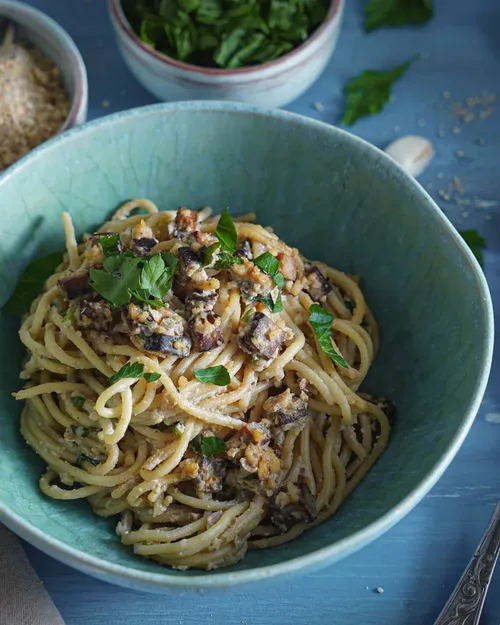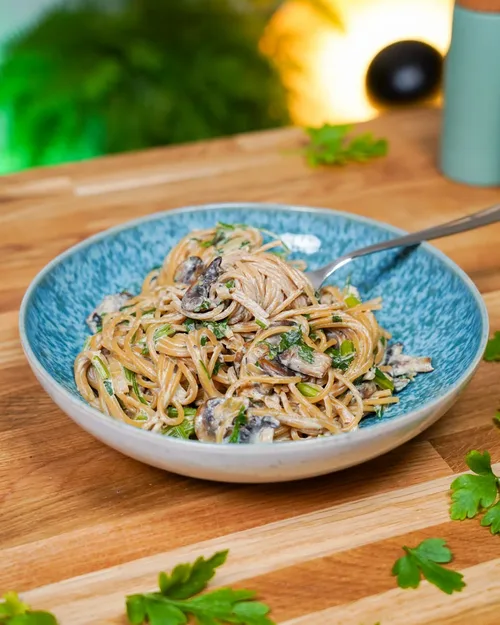

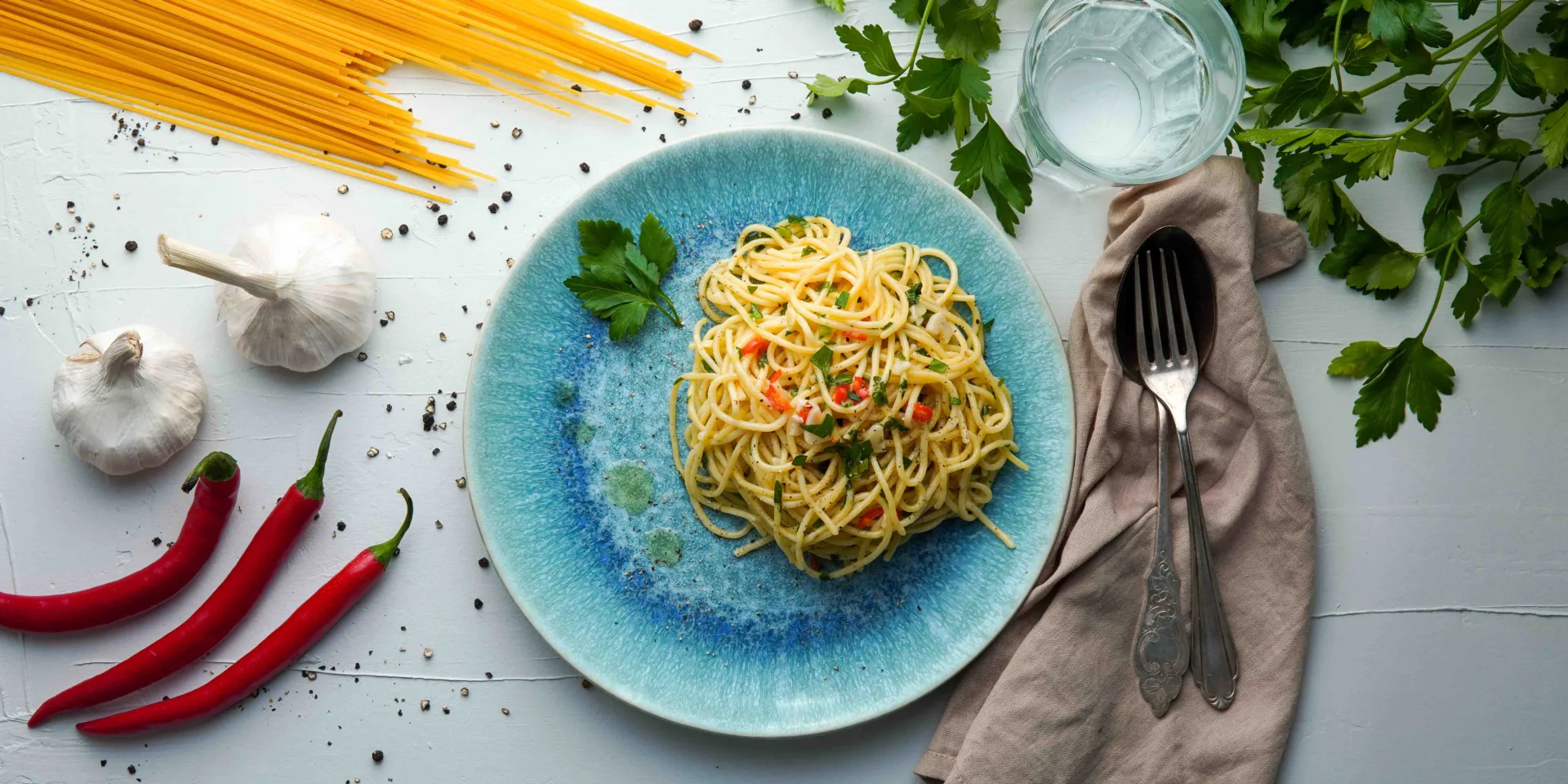
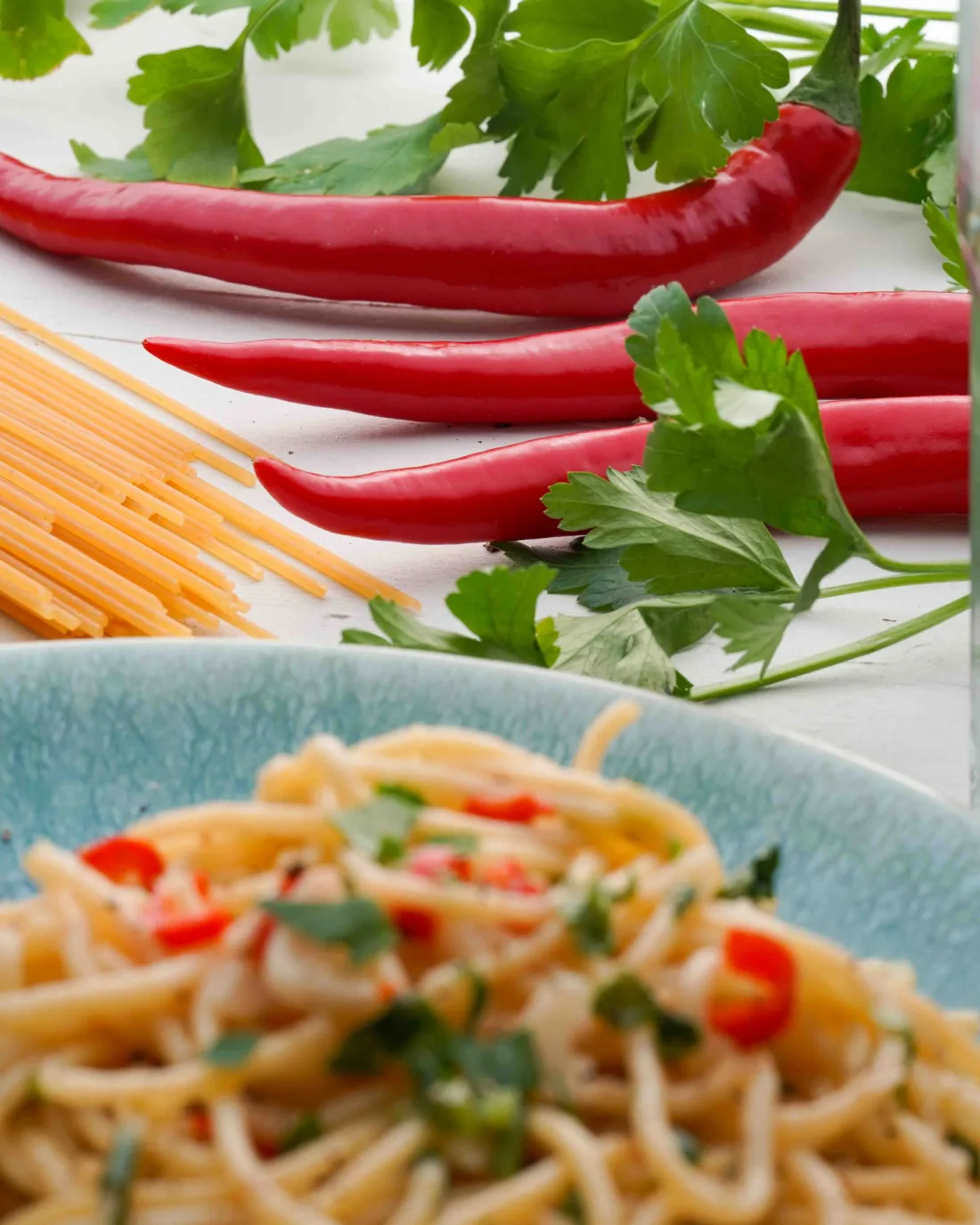
Just five ingredients plus a little salt & pepper, and this vegan classic is on the table in 20 minutes. Packed with nutrients and a wonderfully creamy sauce, it wins everyone over - young and old.
Ingredients
- Prep: 5 min
- Cook: 15 min
- Total: 20 min
Tap ingredients to check them off
In season in Germany right now
Ever since my last vacation in Italy, I've loved this simple pasta dish. Why?
- It's ready in under 20 minutes,
- you usually have the ingredients at home,
- it's cheap,
- … and it's so delicious and filling!
Back to that trip to Italy: Italian food is simply unbelievably good. In restaurants, however, apart from spaghetti al pomodoro🍝 and pizza "without cheese🍕" there's often only one fully plant-based dish: spaghetti aglio e olio con peperoncino. Traditionally, the dish doesn't use any parmesan at all.
"Hmm… ", I thought as I looked at the menu. "A bit boring, really, but hey, at least it's a change." I couldn't have been more wrong! Even though it's made from just a handful of ingredients, it's incredibly flavorful - thanks to olive oil and garlic! You also still feel fit for the day after eating it - very welcome in the Italian midday heat. And, last but not least, it's one of the cheapest dishes on the menu😉.
Back home in Hamburg, I've made it countless times. And even though the dish is quite simple, getting the ratio of the ingredients just right was a little challenge. I find the ratio of cooking water to salt especially important, so that the sauce turns nicely creamy while the spaghetti are still salted just right. Only then does it taste "like at a good Italian restaurant".
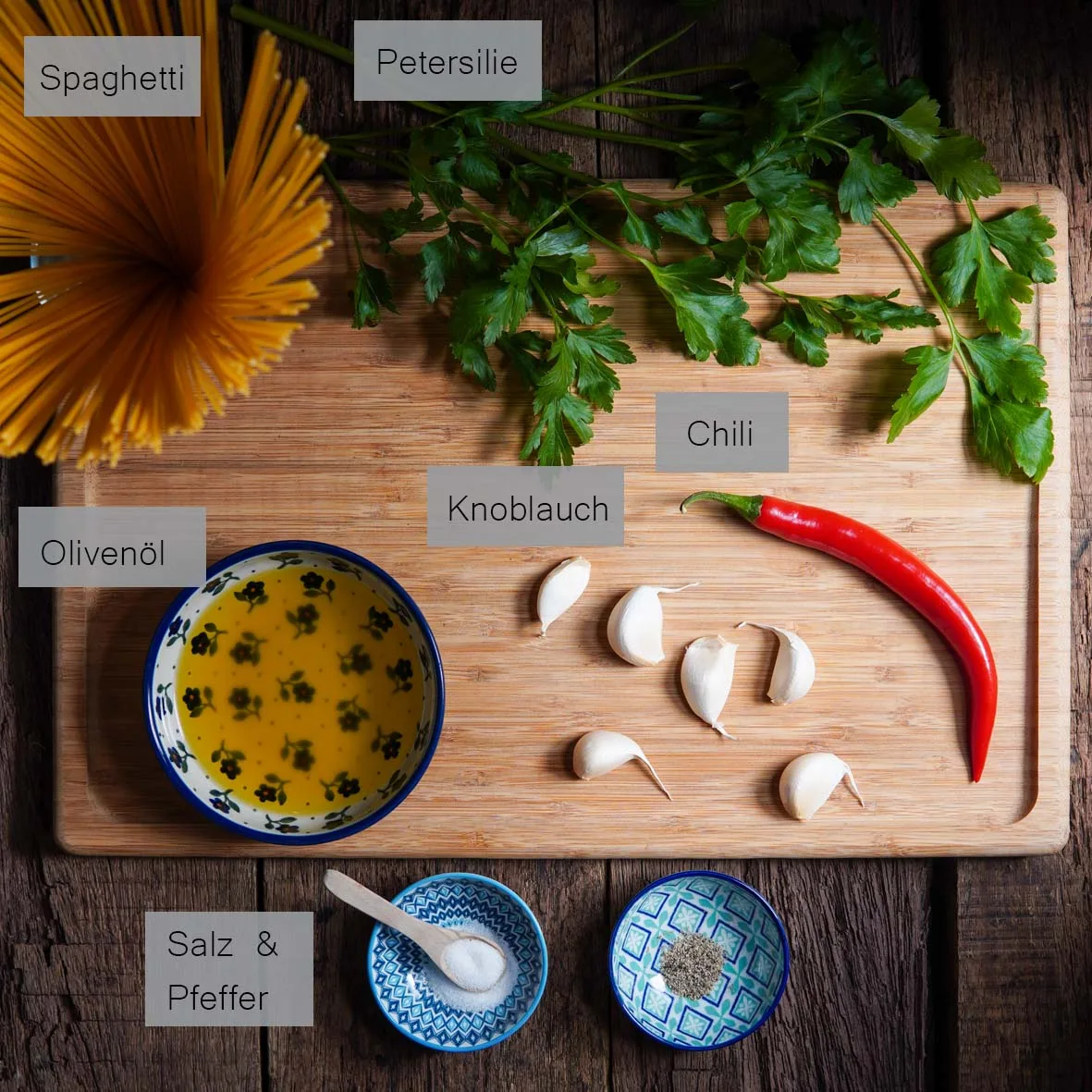
- Put the water for the spaghetti on to boil.
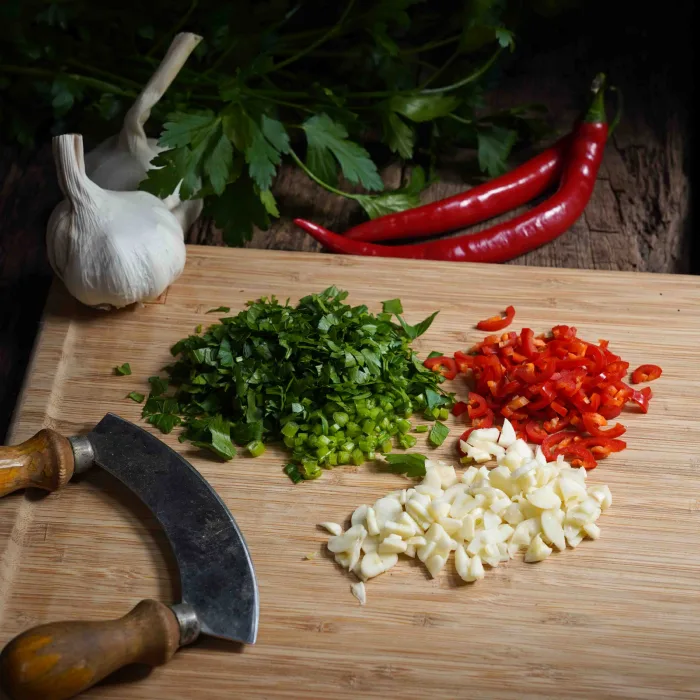
- Dice the garlic.
- Cut the chili into half rings (see tips).
- Finely chop the parsley. You can use the stems too.
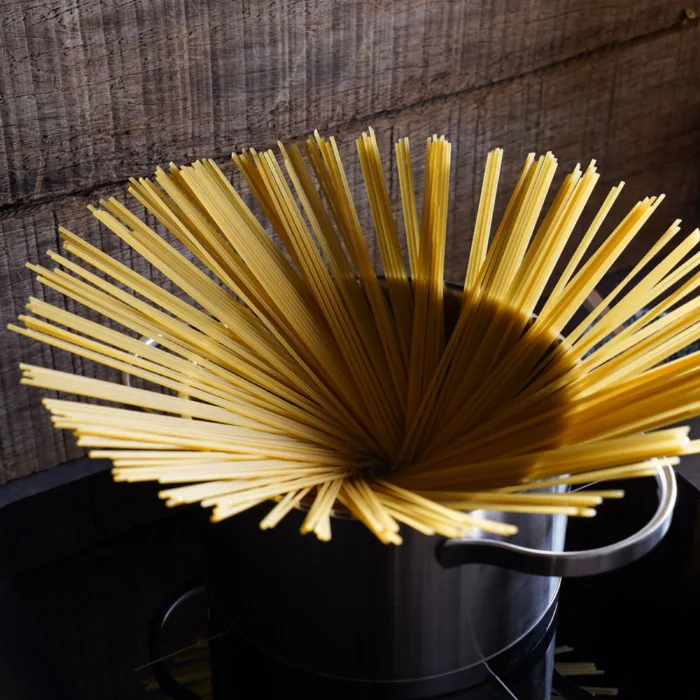
- As soon as the water is boiling, add the salt. Then cook the spaghetti according to the package instructions.
- At the end of the cooking time, catch the pasta water in a bowl or ladle it straight into the pan with the sauce (see next step).
You'll find notes on the cooking time and on the amounts of water and salt in the tips below.
- Gently warm the olive oil in a large pan.
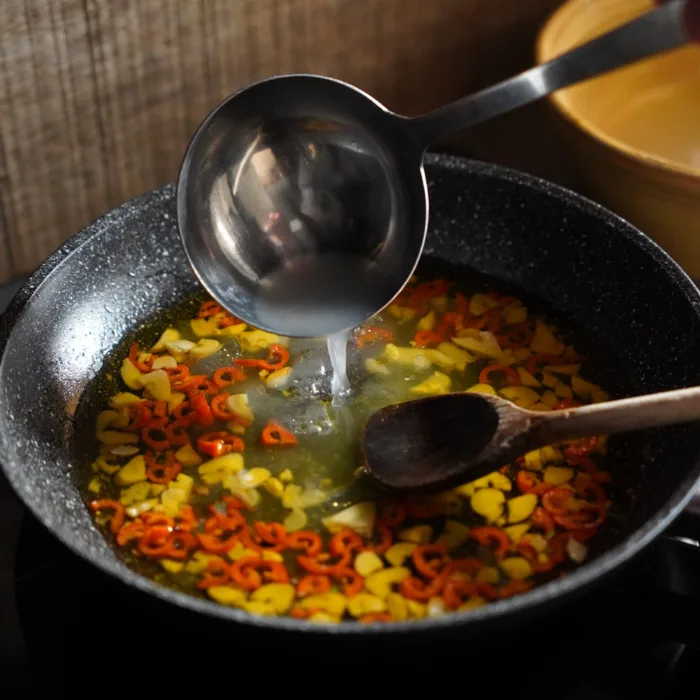
- Add the garlic and chili to the pan and let them infuse for about 5 minutes.
Important: The oil must not get too hot, otherwise the garlic turns bitter. Ideally, a few little bubbles should form around the garlic.
- Then carefully add the pasta water.
Important: Here, too, make sure the oil isn't too hot, or the water will splatter😉.
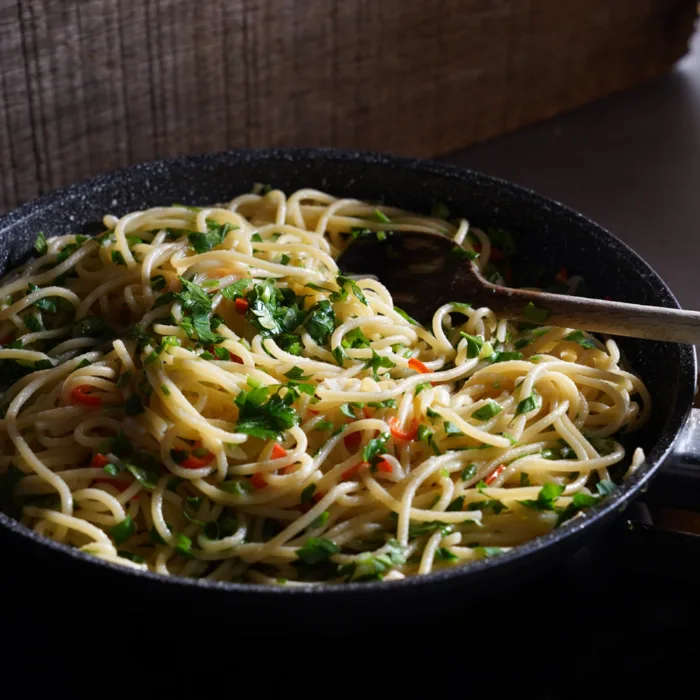
- Add the cooked spaghetti to the pan and let them sit for a few minutes.
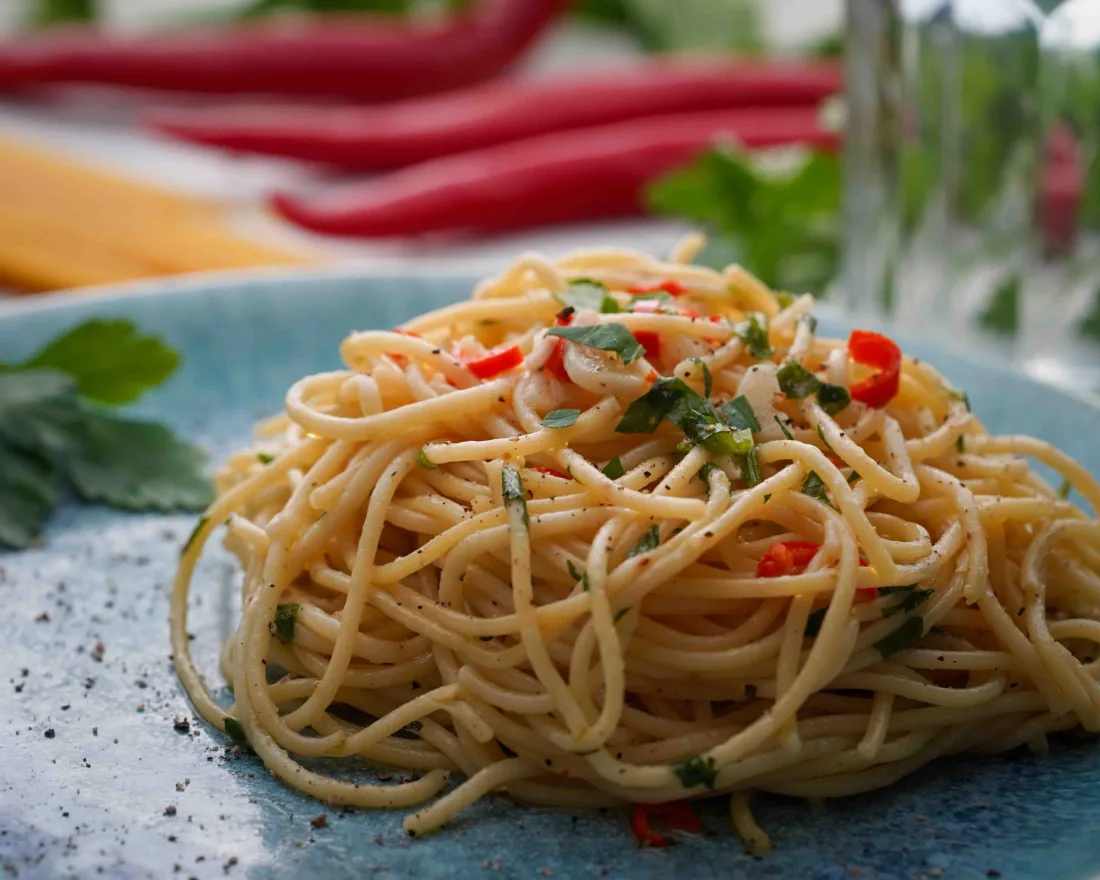
- As soon as the spaghetti have absorbed all the water, add the parsley and season with pepper.
Tips
About the ingredients:
- Spaghetti: Whole wheat pasta is the much healthier choice compared to "regular" pasta. For example, it has four times as much fiber, keeps you full longer and doesn't make your blood sugar spike as quickly after eating (link, in German).
- Garlic: It's sometimes recommended to only lightly crush the garlic, fry it in the oil and then remove it again. I always eat the garlic, of course, because it adds valuable nutrients to the dish - and not a single gram ends up in the compost unnecessarily.
- Olive oil: The olive oil is the main flavor carrier in this recipe. That's why I always go for a good-quality olive oil.
- Chili: If you can't quite judge how hot your chili is yet, it's best to approach it carefully. I usually buy my chilies at the same vegetable market - that way you know what you're getting😉.
- Parsley: I always buy a whole bunch of parsley at the vegetable market (you can even get it plastic-free), chop it up and pop it in the freezer. Sealed in a jar, it keeps for what feels like forever.
- Salt: For one thing, the pasta absorbs the salt from the cooking water. On top of that, the pasta water itself brings salt into the "sauce". That's why the ratio of water to salt matters.
- Water: The spaghetti cooking water takes up the starch released by the pasta. That's what makes the "sauce" in step 4 so nicely creamy. For this reason, the ratio of water to spaghetti matters. The less water you use, the more concentrated the starch in the cooking water. I find 1 liter (about 1 quart) of water per 250 g (9 oz) of pasta ideal. Also: less water means less energy is needed to heat it. That lowers your electricity bill (and saves money) and is also easier on the environment thanks to lower CO2 emissions.
- Variations: To jazz up the dish, you can fry the zest of half an organic lemon along with the rest. Rinse the lemon thoroughly under cold water, then cut off the peel with a sharp knife. In step 3, fry the lemon peel together with the garlic and chili.
Cooking time of the spaghetti:
Traditionally, the spaghetti are drained a few minutes before the end of the cooking time so they can finish cooking in the sauce. In my experience, however, spaghetti taste best when you first cook them according to the package instructions and then let them cook in the sauce for a few more minutes. What's your experience? Feel free to tell me in the comments ✒️.
#plasticfree
This spaghetti aglio e olio isn't just vegan by nature - you can also easily make it plastic-free. Salt - and nowadays spaghetti too - can be bought in cardboard packaging even at discount supermarkets. Paradoxically, it's still a bit harder with the vegetables, since chili and garlic usually come in plastic nets. Still, you find them sold loose in supermarkets more and more often. Instead of a potted parsley plant, with a bit of luck you can buy a bunch, or simply get it frozen in cardboard packaging.
To save time heating the water, you can heat part of it in an electric kettle. But make absolutely sure that the inside of the kettle is free of plastic, otherwise an incredible amount of microplastics can be released and end up in your body and in nature (link, in German). To avoid microplastics, kettles with an inner wall made of stainless steel or glass are usually the better choice. Unfortunately, even these kettles often have some "internal parts" made of plastic (e.g. the limescale filter, seals or the lid). But there is one company (I really only know of one single company) that stands out in a positive way: Ottoni Fabbrica from Italy makes kettles entirely out of stainless steel (not sponsored).
#cheap_vegan
This dish costs just €1.33 per person if you only use ingredients in plastic-free packaging (as of 2023). With plastic-packaged products, it's even just €1.06. If you want to bring the cost down further, you can use chili powder instead of fresh chili, or a cheaper olive oil.
Nutrition
estimated per serving
- 814kcal
- 15.9 gProtein
- 90.6 gCarbs
- 42 gFat
Calculated from all ingredients, including the sides. Values vary depending on the product, the size of the vegetables and how you prepare them.
Cost Test phase
estimated per serving
about €0.90
This section is still in a test phase: a rough estimate based on conventional German discount-supermarket prices (as of September 2026). Only the amounts used are counted, excluding salt, pepper and spices.
How did you like it?
No ratings yet
Comments
Your feedback is what keeps me going – every comment means the world to me!
Did you change something or try other ingredients? Tell me and everyone who cooks this recipe next!