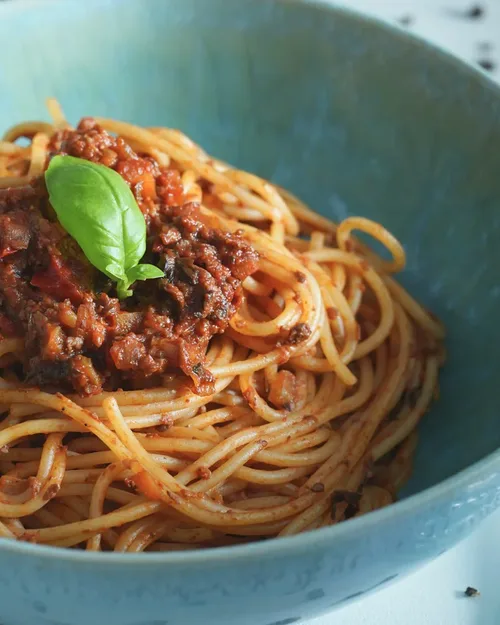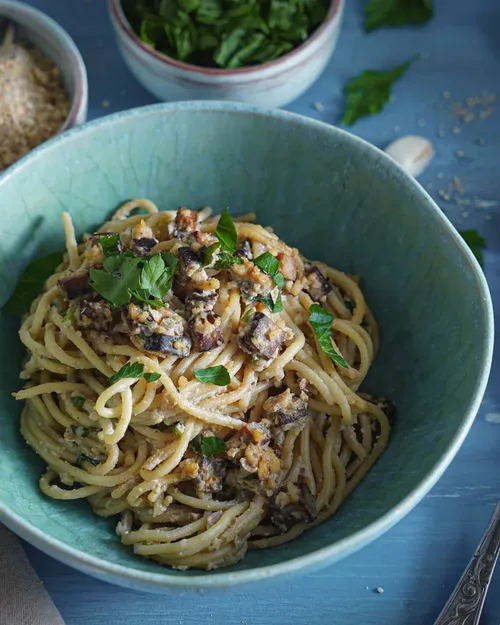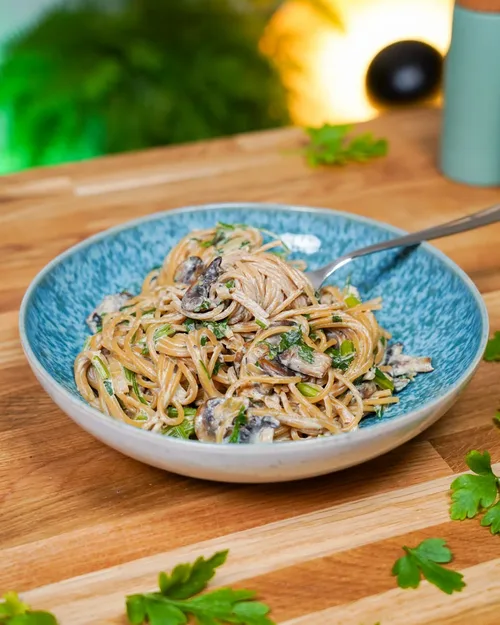

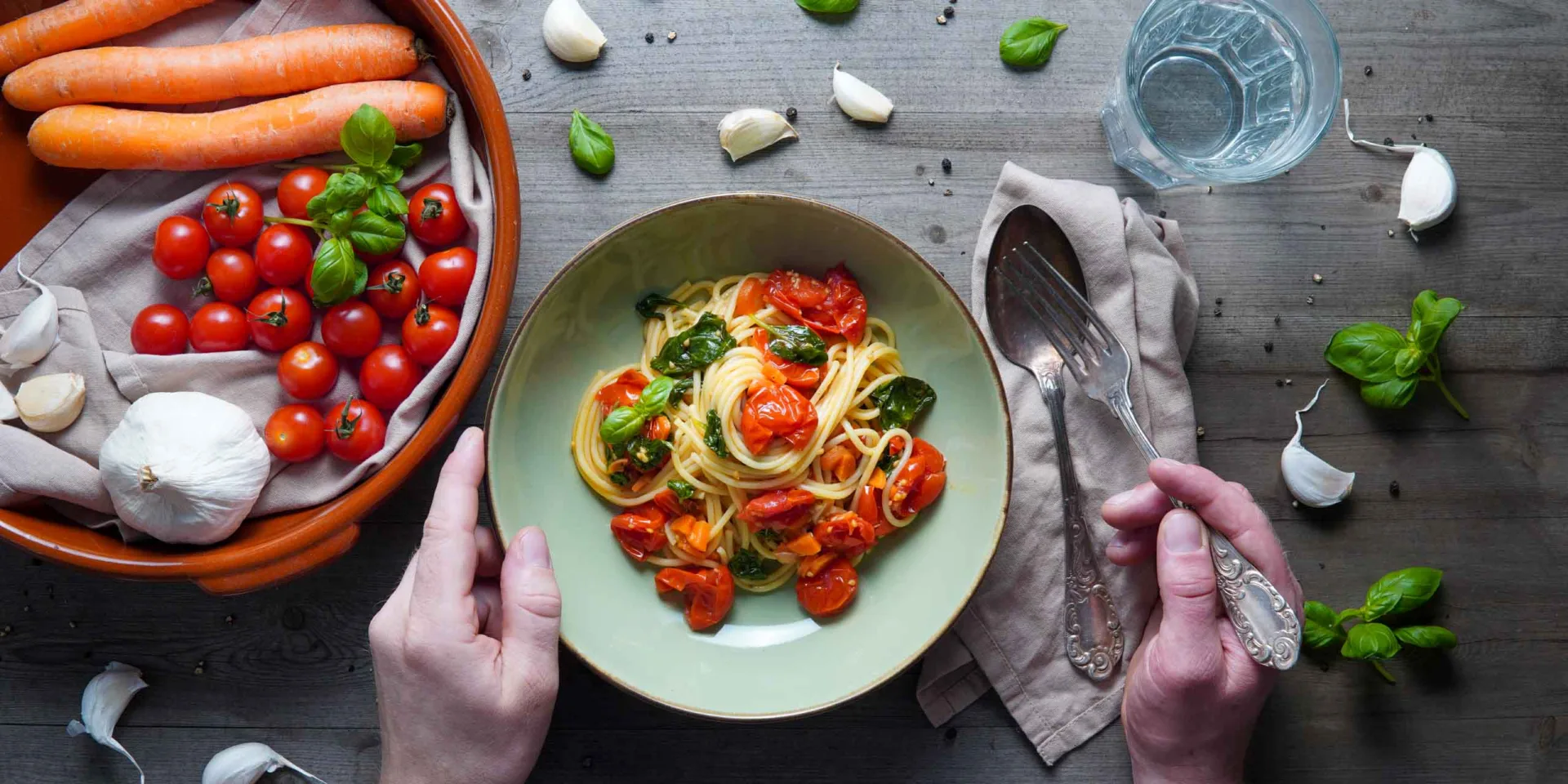
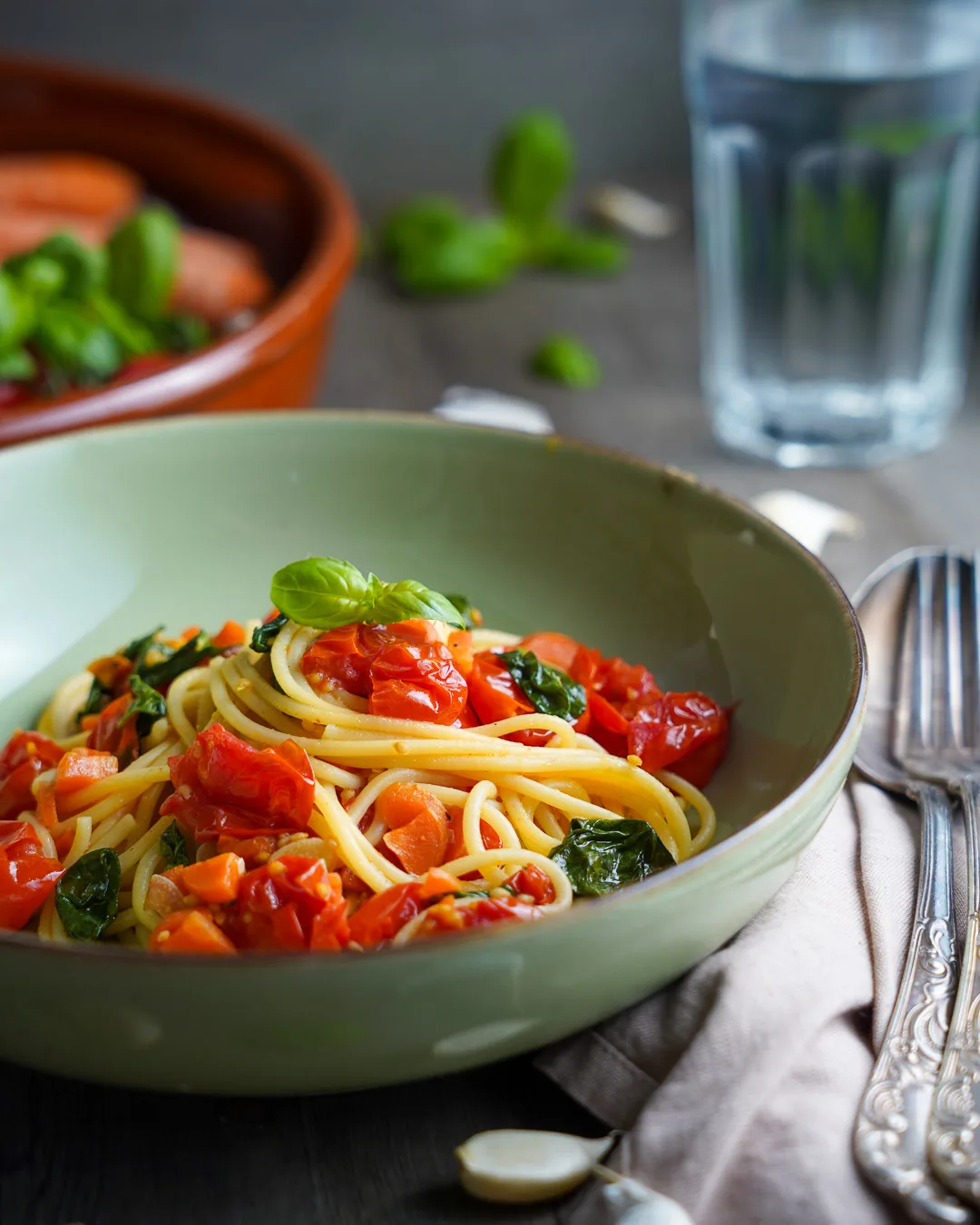
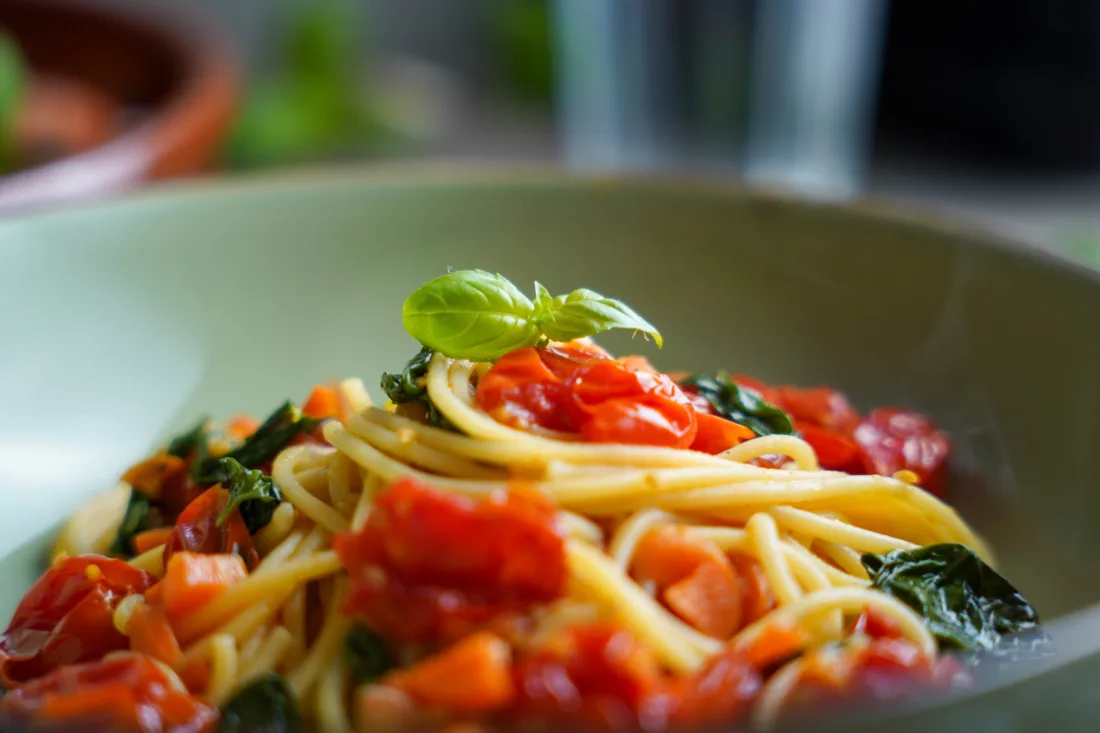
A true classic (and vegan, too). This spaghetti pomodoro is quick to make, creamy, cheap (€2.40 per person) and simply everyone loves it. As a little twist, fried carrots go into the sauce, giving it a pleasantly sweet note. You can round off the dish with homemade vegan parmesan, made from just four ingredients.
I'll show you step by step how to get the Italian original onto your plate. Enjoy!
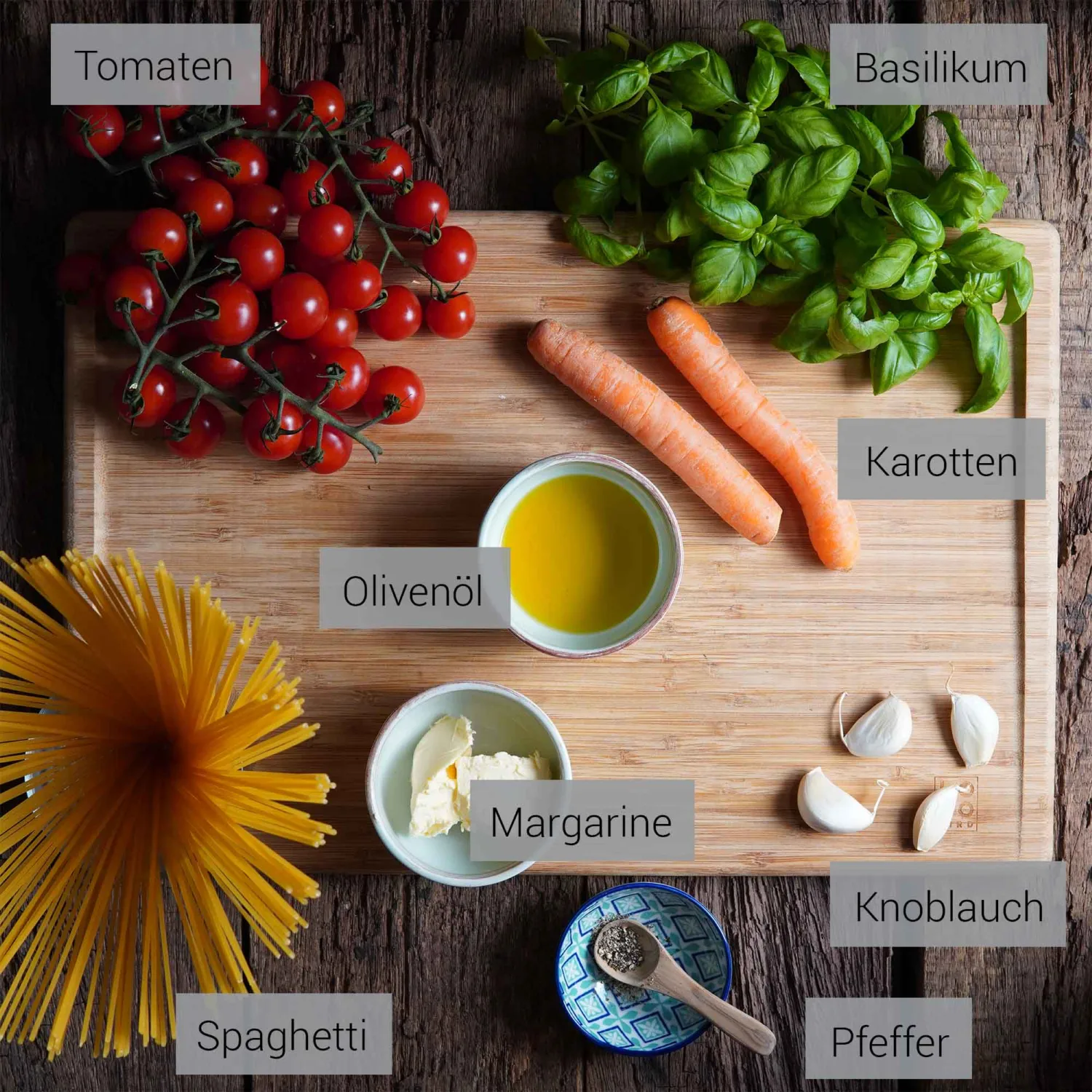
Ingredients
- Prep: 10 min
- Cook: 15 min
- Total: 25 min
Tap ingredients to check them off
In season in Germany right now
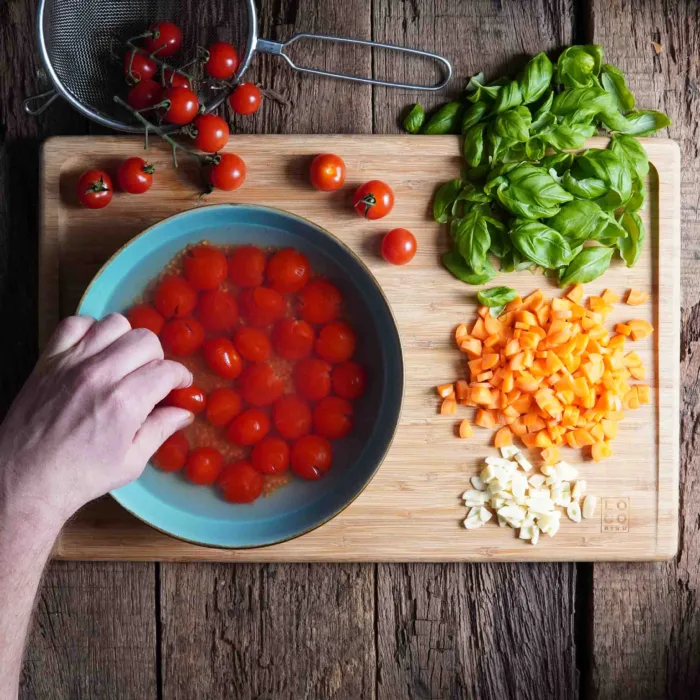
Prepare the ingredients:
- Squeeze the tomatoes so that they burst open in one spot and the seeds shoot out.
Tip: To keep your kitchen clean, squeeze the tomatoes in a bowl of water and then fish the seeds out with a sieve. Alternatively, you can simply quarter the tomatoes.
- Dice the carrots.
- Crush the garlic (e.g. with a large knife or the heel of your hand) and slice it.
- Pick the basil leaves.
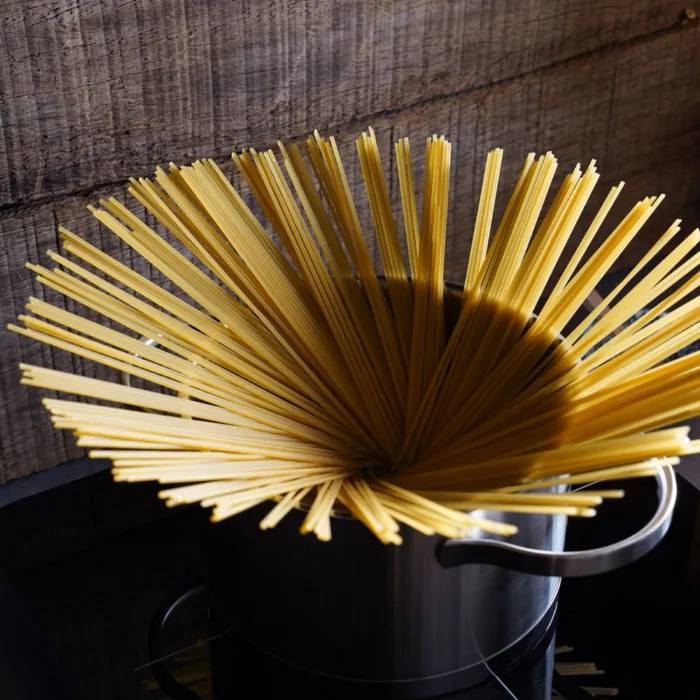
Cooking the spaghetti:
- Bring salted water to a boil and cook the spaghetti according to the package instructions.
- At the end of the cooking time, catch the pasta water in a bowl or ladle it straight into the pan with the tomato sauce (see next step).
You'll find notes on the cooking time and on the amounts of water and salt under "Tips".
Making the tomato sauce:
- First heat the olive oil in a large pan & fry the carrots for a few minutes until nicely browned.
- Then add the garlic for about half a minute.
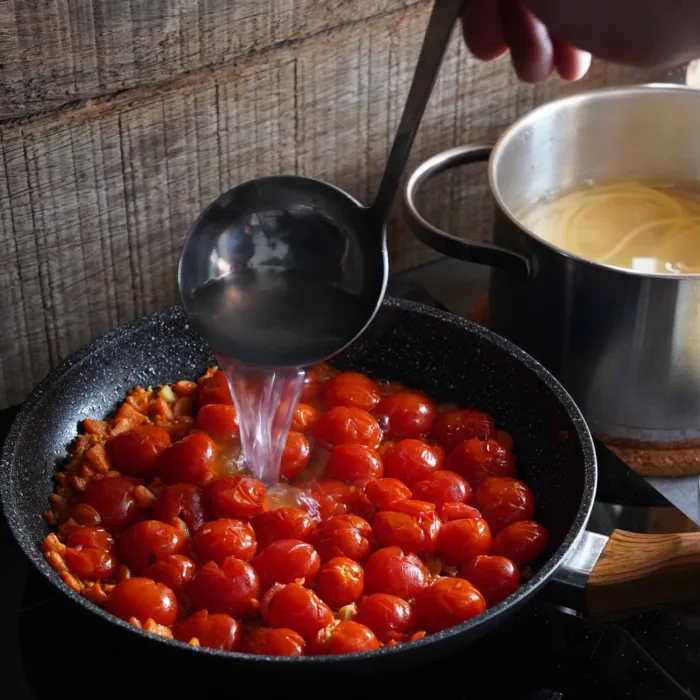
- Deglaze with the squeezed tomatoes and the seeds and let everything simmer for about three minutes.
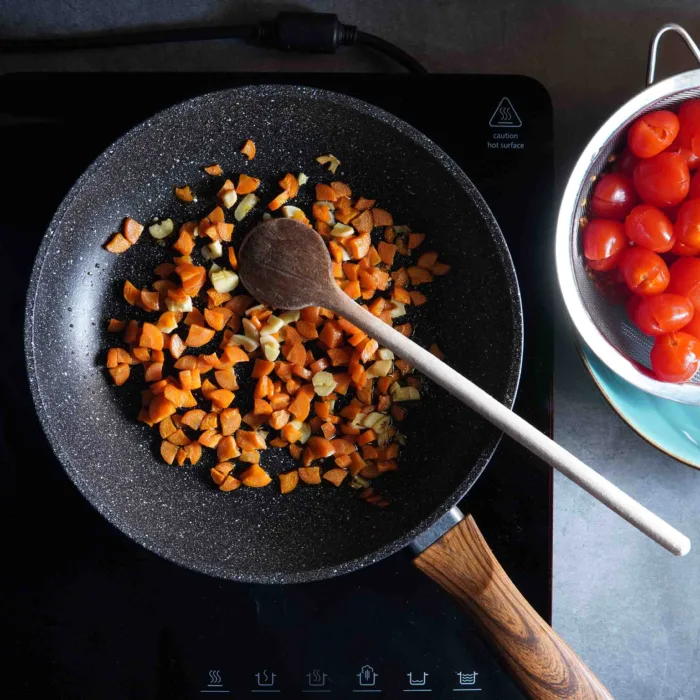
- To make the sauce creamy, add the pasta water and the margarine.
- Add the cooked spaghetti and let everything reduce. That way they soak up the flavor of the sauce.
- Fold in the basil & season with pepper.
Toppings: sunflower seeds or pine nuts toasted in the pan, vegan parmesan or capers.
Tips
About the ingredients:
- Spaghetti: Whole wheat pasta is the much healthier choice compared to "regular" pasta. For example, it has about four times as much fiber, keeps you full longer and doesn't make your blood sugar spike as quickly after eating (link, in German).
- Cooking time of the spaghetti: Traditionally, the spaghetti are drained a few minutes before the end of the cooking time so they can finish cooking in the sauce. I like them best, though, when they're first cooked according to the package instructions and then cook in the sauce for a few more minutes. What's your experience? Feel free to tell me in the comments ✒️.
- Fresh tomatoes, or from a jar or can? Both are a good choice in terms of taste. Keep in mind, though, that canned tomatoes are often cheaper, and fresh tomatoes are quite often shrink-wrapped in plastic. Visually, however, little cherry tomatoes are unbeatable. More on that below under #cheap_vegan.
- Salt: In this recipe the dish is only salted via the salt in the pasta water. For one thing, the pasta absorbs the salt from the cooking water. On top of that, a few ladles of the pasta water go into the sauce itself. That's why the ratio of water to salt matters. I recommend half a teaspoon of salt per liter (1 quart) of water.
- Water: The spaghetti cooking water takes up the starch released by the pasta. That's what makes the sauce in step 4 so nicely creamy. For this reason, the ratio of water to spaghetti matters. The less water you use, the more concentrated the starch in the cooking water. I find about 1 liter (1 quart) of water per 200 g (7 oz) of pasta ideal. Also: less water means less energy is needed to heat it. That not only lowers your electricity use (and saves money), it's also easier on the environment thanks to lower CO2 emissions.
- Vegan parmesan: In my recipe for vegan spaghetti carbonara you'll find a particularly quick recipe for vegan parmesan. The plant-based alternative is made from just four ingredients and ready in 5 minutes.
#cheap_vegan:
With this dish, cheap and tasty go together perfectly (as of 2023):
- Plastic-free version: €2.40 per person
- If you allow a bit more plastic packaging: €2.18 per person.
To bring the price down a little, I used canned tomatoes in the calculation. Their price is stable throughout the year, they're much cheaper than fresh cherry tomatoes and they taste great. They just can't quite keep up visually. If you still don't want to do without fresh tomatoes, I recommend the summer months of June to August, when they cost only about half as much. You'll find statistics on the seasonal price trend here (in German): statista.com.
#plasticfree:
- You can very easily shop for this recipe plastic-free. If the cherry tomatoes are shrink-wrapped in plastic, you can use regular vine tomatoes instead, or whole or chopped canned tomatoes.
- Onions and garlic unfortunately often still come in plastic nets. Luckily, you can find these staples sold loose more and more often in well-stocked supermarkets or at the classic farmers' market.
- Spaghetti are available in cardboard packaging, e.g. from Barilla. If you have some time and feel like it, you can even make your own spaghetti. The taste is hard to beat!
- Basil: With a bit of luck, the greengrocer sells fresh basil in bunches. Since the herb is a little delicate in bunches, it's often kept in the cold room and only brought out on request. So it's worth asking the seller whether they currently have fresh basil in stock. Otherwise, basil is sometimes available frozen.
Season
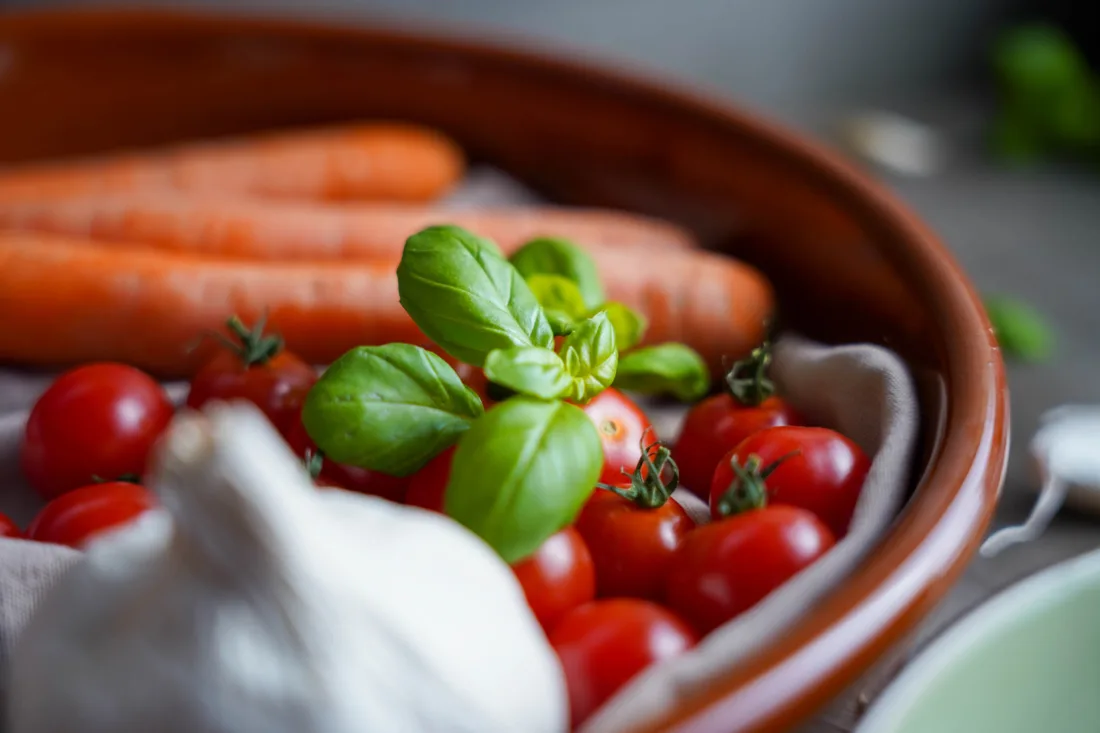
Season: July to September- carrots: June to November
- tomatoes: July to September
Only main ingredients of 100 g or more, or a whole piece, count. Spices and small amounts are left out.
Nutrition
estimated per serving
- 649kcal
- 14.6 gProtein
- 82.3 gCarbs
- 28 gFat
Calculated from all ingredients, including the sides. Values vary depending on the product, the size of the vegetables and how you prepare them.
Cost Test phase
estimated per serving
about €1.20
This section is still in a test phase: a rough estimate based on conventional German discount-supermarket prices (as of September 2026). Only the amounts used are counted, excluding salt, pepper and spices.
How did you like it?
No ratings yet
Comments
Your feedback is what keeps me going – every comment means the world to me!
Did you change something or try other ingredients? Tell me and everyone who cooks this recipe next!