
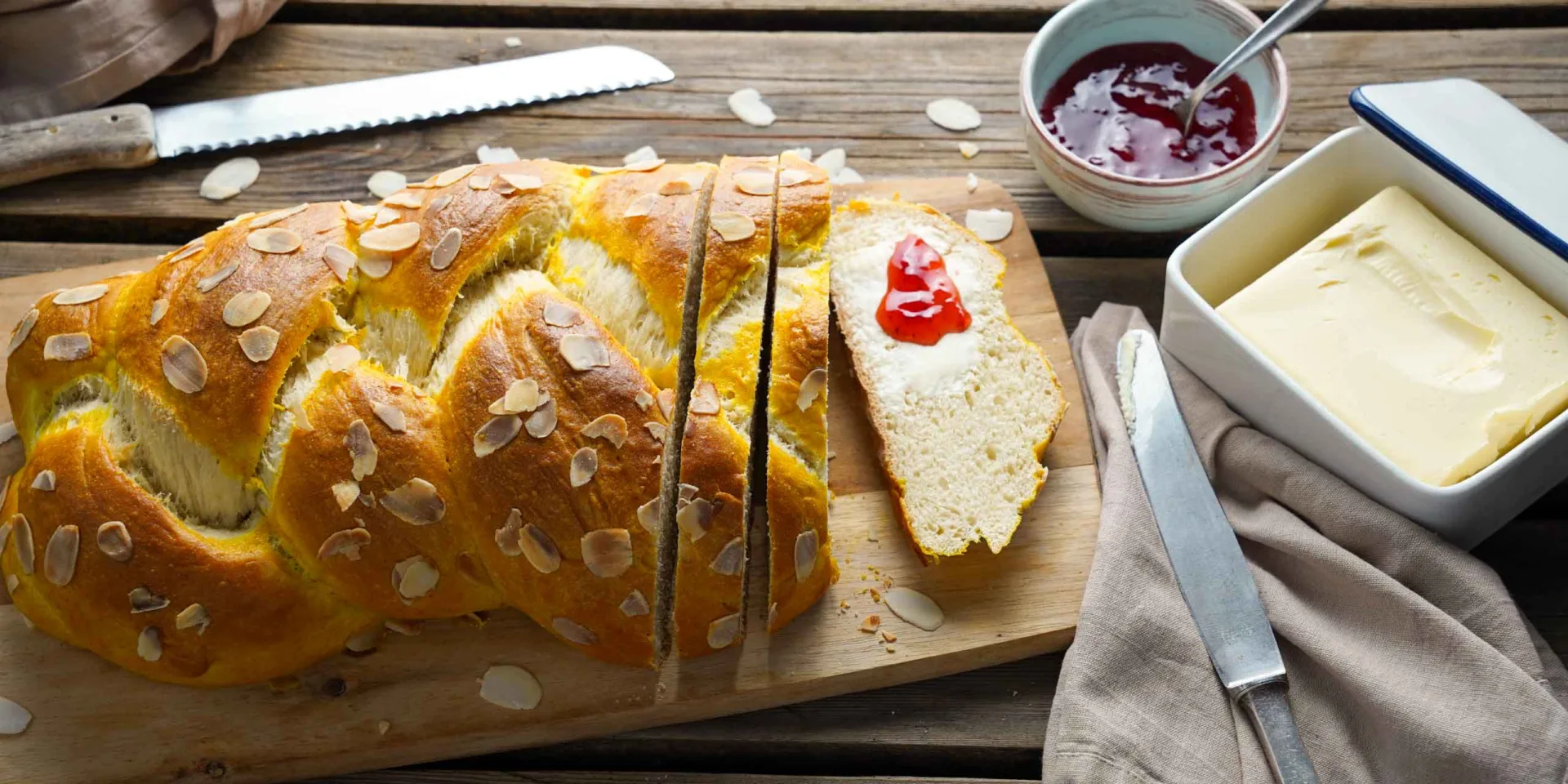
Baking an Easter braid from purely plant-based ingredients is super easy and takes just a few steps. You only need to plan a little time for the dough to rise. But it's absolutely worth it, because this Easter braid
- has a light, airy texture,
- is really aromatic,
- tastes at least as good as the classic version,
- and has a beautiful golden-brown top.
All you need are everyday ingredients and one little trick. Enjoy!
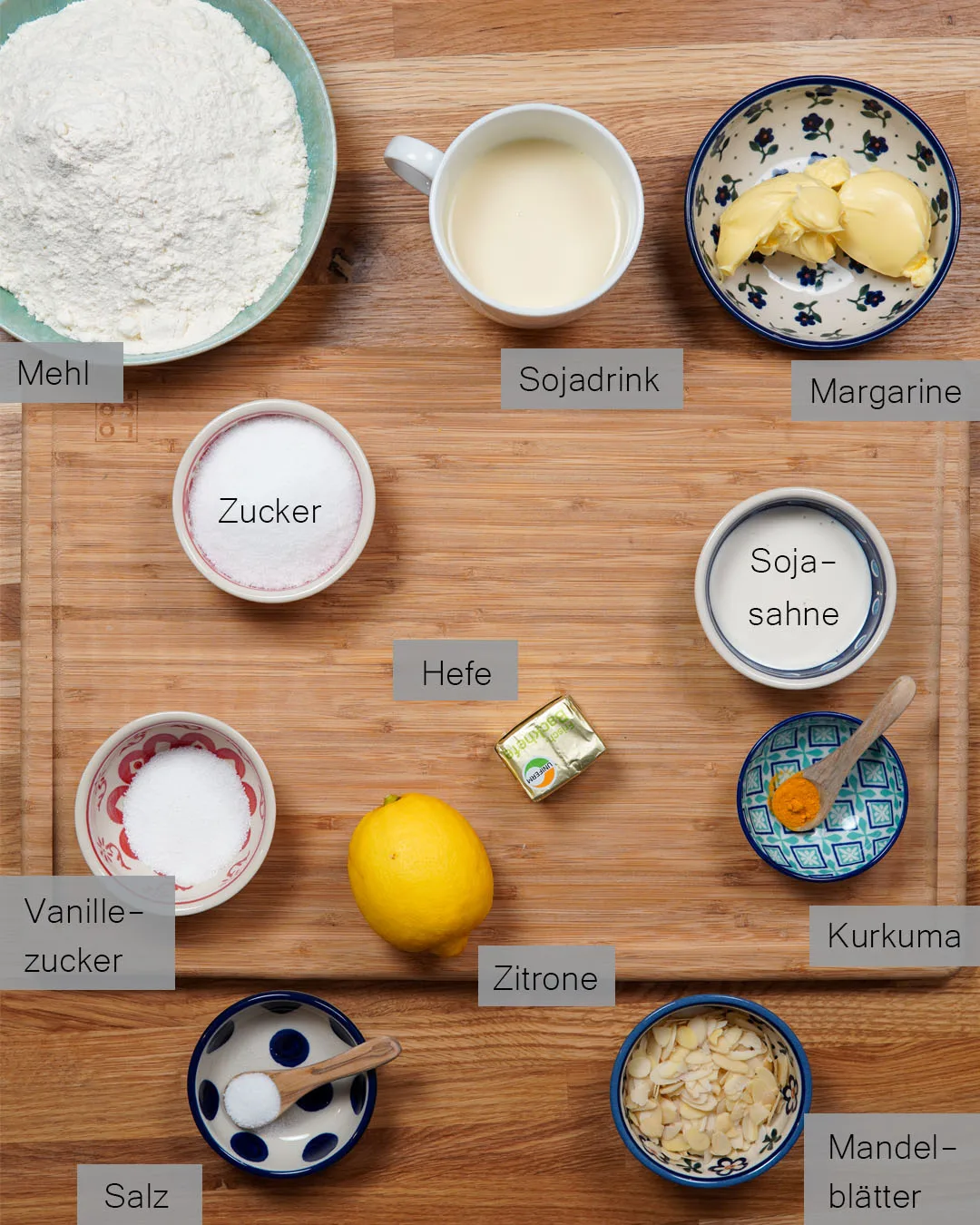
Ingredients
- Prep: 30 min
- Rest: 3 h
- Total: 3.5 h
Tap ingredients to check them off
For the glaze
Toppings
In season in Germany right now
Making the starter dough:
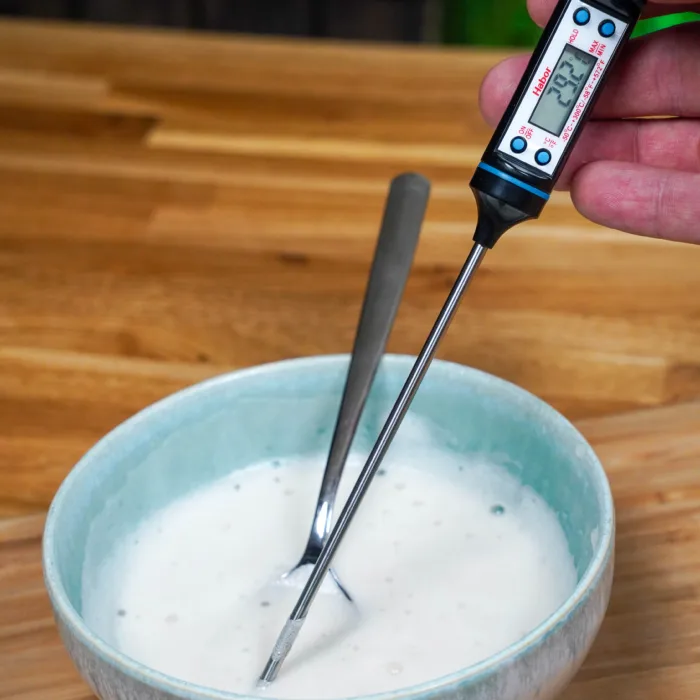
- Warm the oat milk until lukewarm.
Tip: The temperature shouldn't go above 104 °F / 40 °C, otherwise the yeast dies.
- Mix all the ingredients for this step and leave to rise for 10 minutes.
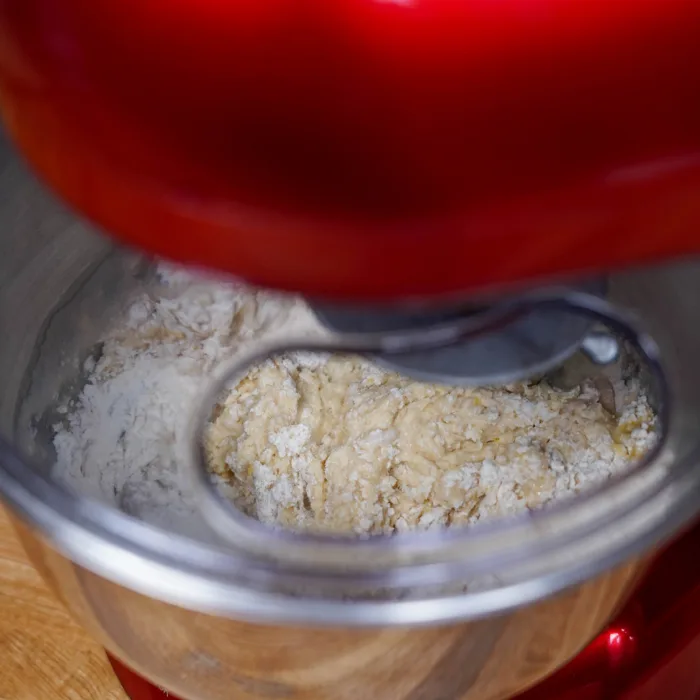
- Mix all the ingredients for this step in a bowl and knead for 5 minutes.
Tip: It's easiest with a stand mixer - but you can get there just as well with your hands, no electricity or machines needed.
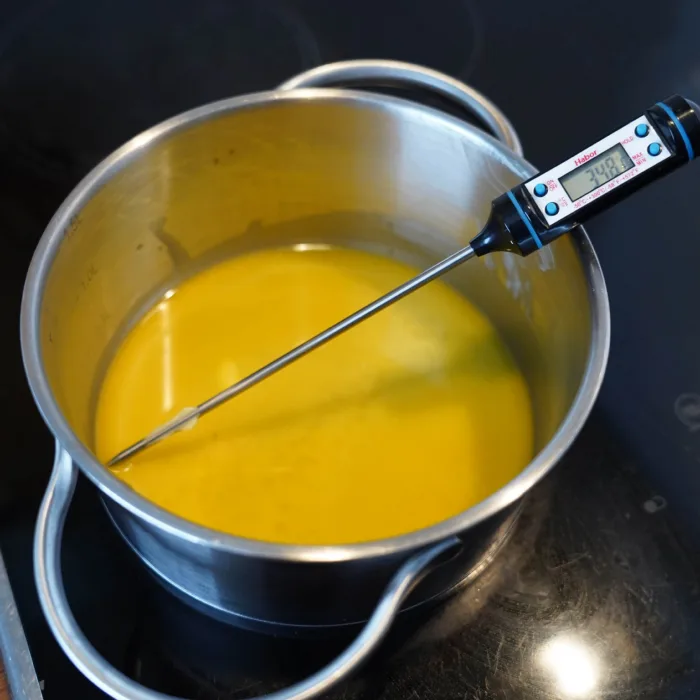
- Gently warm the margarine in a pot until it has melted.
- Add the melted margarine (below 104 °F / 40 °C) to the mixing bowl and knead for another 5 minutes.
Tip: The dough is kneaded enough when it comes away from the sides of the bowl easily. Depending on the flour you use, it can help to add another 1 to 3 tbsp of flour. Add it gradually.
- Grease a large bowl and let the dough rise in it for 2 hours in a warm place.
- Cover the bowl with a damp cloth.

Braiding

(a) Dust your work surface with flour first. Then divide the dough into three equal pieces and roll them into strands.

(b) Press the ends together.

(c) Braid the strands alternately as shown in the picture. Next, you'd place the right strand over the middle one. And so on...
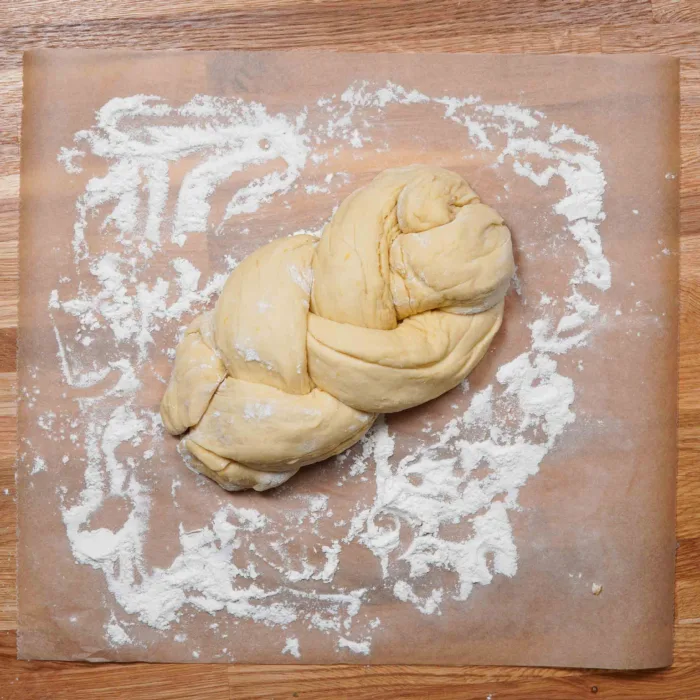
(d) In the last step, gently press the ends of the strands together. If the beginning of the braid isn't perfect (like mine😉), turn it around 180°, undo one twist and braid it again. Let the finished braid rise for another hour on the parchment paper.
While the dough rises for one hour (see step 5d), you can prepare the glaze:
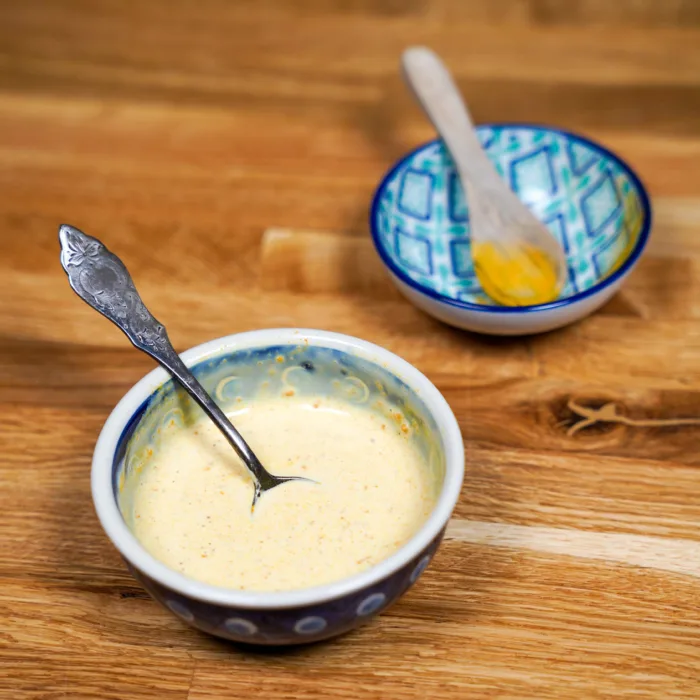
- Mix the soy cream and turmeric and brush the Easter braid with it.
- Sprinkle the braid with sliced almonds.
Tip: The typical taste of turmeric disappears completely during baking.
- Bake at 350 °F / 180 °C convection for 30 minutes. As soon as the top of the Easter braid is crisp, it's done.
- You can eat the Easter braid after just a short cooling time (15 minutes).
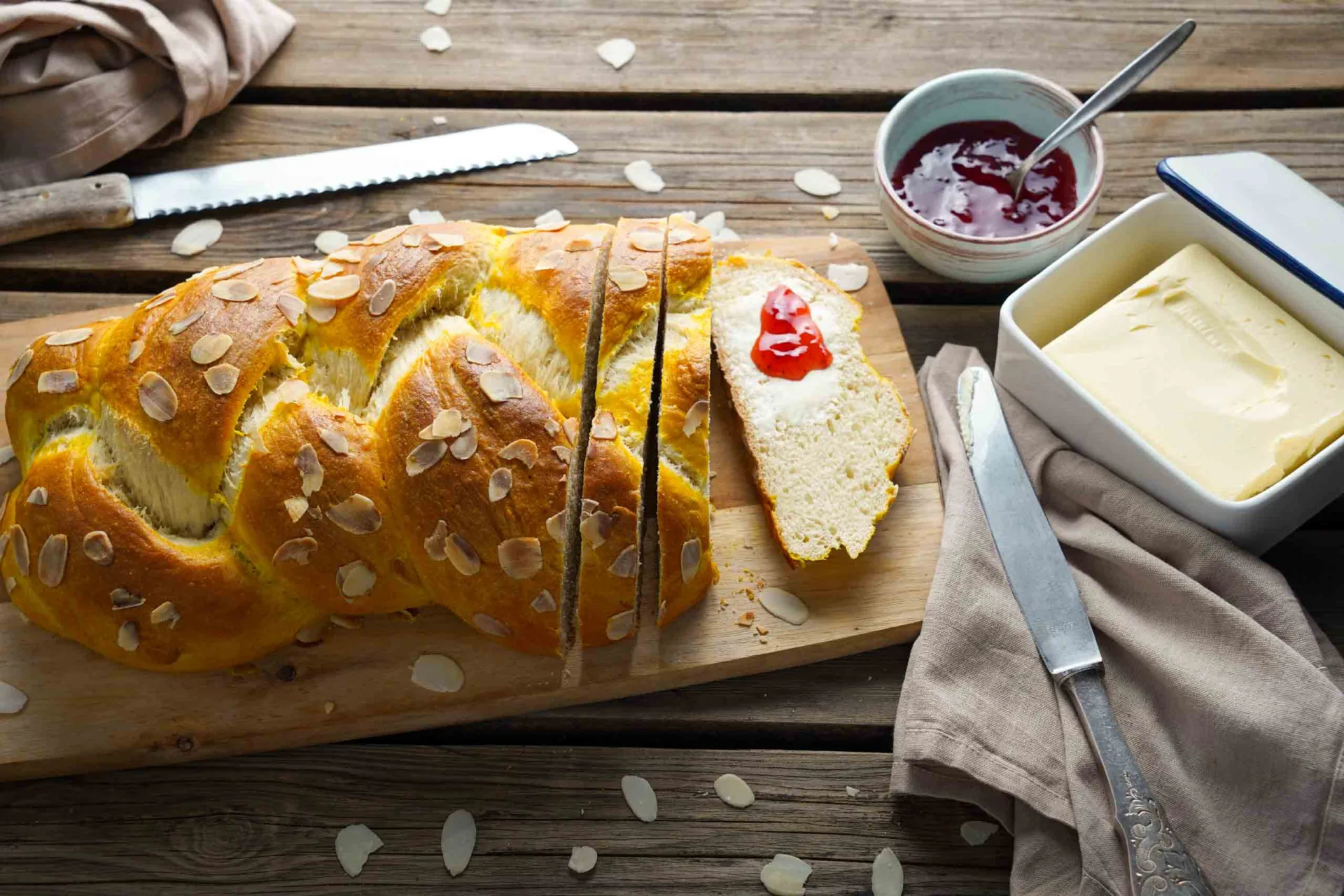
Tips: To make sure the Easter braid keeps its airy shape perfectly when you slice it, I'd let it cool completely and use a good bread knife. Another advantage of letting it cool: the vegan butter or jam won't melt and soak "into" the slice when you spread it. Not only does that look nicer - it actually tastes better too.

About the ingredients:
Flour: I usually use regular German type 405 flour (similar to all-purpose flour) and have always had good results with it. Type 550 flour (similar to bread flour) is said to be even better - I haven't tried it yet, though. What I can clearly advise against is Tipo 00 flour. For lack of alternatives, we used it at Easter 2023 and it was... a disaster😂. The dough barely rose and was very crumbly. So my clear recommendation: type 405 or 550 flour!
Oat milk is perfect for the Easter braid thanks to its slightly sweet taste. But you can use any other plant-based milk too. I've had good results with soy milk, for example - and soy milk is also very high in protein. In general, make sure your plant-based milk is fortified with calcium so you're not missing out compared to cow's milk. If it's also fortified with vitamins like B12, even better.
Lemon: The zest of a lemon gives the Easter braid a lovely aroma. Since the peel of conventionally grown lemons can contain pollutants, you should only use organic lemons. If you don't have an organic lemon at hand, simply use the juice of a conventional lemon instead. For this recipe I'd recommend 1 tbsp of lemon juice.
Turmeric isn't just very healthy - it also gives the Easter braid a beautiful golden-brown finish (tip!). The more turmeric you use, the darker it will look after baking. The taste doesn't change, though, as it disappears completely during baking.
Soy cream: Since the recipe only needs a small amount, any plant-based cream will do. Oat cream is a little sweeter than soy cream. Soy cream, on the other hand, is easier to find - and actually I don't mind a slightly savory note in this rather sweet recipe. In the end, I'd go for whichever cream I can use up in other dishes over the next few days 😉.
#plasticfree
- Margarine is often sold in plastic tubs. You can easily avoid this by choosing margarine in aluminum-foil packaging.
- Vanilla sugar usually comes in small paper packets, which are then shrink-wrapped together in a larger plastic pack. That way several small packets can be sold as one item. Practical, but it means more packaging waste and more plastic. It's better to mix your own from regular sugar and a little bourbon vanilla powder (from a glass jar). Once you've made it, it lasts a long time.
- Fresh yeast instead of dry yeast: Just like vanilla sugar, dry yeast is often sold in shrink-wrapped multipacks. Unlike vanilla sugar, the packets themselves are made of a complicated multi-layer material. A cube of fresh yeast, on the other hand, is always plastic-free and can be found in the refrigerated section.
- Lemons are often sold in plastic nets. Luckily you can also buy them loose, so the plastic-free option is super easy here.
#cheap_vegan
- If you make your own vanilla sugar with ground vanilla powder, a small jar seems expensive at first. But you only need tiny amounts of the powder, so the DIY version pays off in the long run.

Nutrition
estimated per piece
- 250kcal
- 5.1 gProtein
- 39.2 gCarbs
- 7.6 gFat
Calculated from all ingredients, including the sides. Values vary depending on the product, the size of the vegetables and how you prepare them.
Cost Test phase
estimated per piece
about €0.15
This section is still in a test phase: a rough estimate based on conventional German discount-supermarket prices (as of September 2026). Only the amounts used are counted, excluding salt, pepper and spices.
How did you like it?
No ratings yet
Comments
Your feedback is what keeps me going – every comment means the world to me!
Did you change something or try other ingredients? Tell me and everyone who cooks this recipe next!